


What Are Reasonable and Necessary Supports Under the NDIS? The National Disability Insurance Scheme (NDIS) helps people by funding these supports, which are essential for achieving personal goals and living more independently. Understanding what these supports are is crucial for effective NDIS planning.
If you need expert advice in Brisbane, Melbourne, or Perth, call 1300 755 052. You’ll talk to a local NDIS expert.
Key Takeaways
- Reasonable and necessary supports are funded by the NDIS to help participants achieve their goals.
- The NDIS has a checklist to clarify what is considered ‘reasonable and necessary supports’.
- Supports can be categorized into stated supports and flexible supports.
- Core Supports funding can be used flexibly across various categories.
- Plan Management is a stated support that includes services like payment of invoices and budget tracking.
Understanding Reasonable and Necessary Supports Under the NDIS
Understanding the National Disability Insurance Scheme (NDIS) is key. It helps participants get the funding they need to reach their goals and improve their life quality. Knowing what supports are reasonable and necessary is crucial. Our guide on what the NDIS is covers the basics first.
The Definition of Reasonable and Necessary
Reasonable and necessary supports are vital for participants to meet their NDIS goals. They must align with the NDIS’s principles of reasonable and necessary supports. The NDIS looks at the participant’s disability, living situation, and personal goals to assess this.

The Five Key Criteria for NDIS Support Approval
The NDIS has five criteria to check if a support is reasonable and necessary:
- Is the support related to the participant’s disability? The support must directly address the participant’s disability and needs.
- Is the support effective and likely to achieve the participant’s goals? The support must be backed by evidence and positively impact the participant’s life.
- Is the support value for money? The NDIS checks if the support is cost-effective and offers good value for the funding.
- Is the support consistent with good practice? The support must follow current best practices in disability support and align with NDIS principles.
- Is the support likely to cause harm to the participant or others? The NDIS ensures the support won’t harm the participant or others.
| Criteria | Description | Example |
|---|---|---|
| Disability Related | The support must be directly related to the participant’s disability. | Physiotherapy for a participant with a physical disability. |
| Effective and Goal-Oriented | The support must be evidence-based and likely to achieve the participant’s goals. | Speech therapy to improve communication skills. |
| Value for Money | The support must be cost-effective and represent good value for the funding provided. | Choosing a service provider that offers competitive pricing. |
What’s Not Covered by NDIS Funding
While the NDIS offers wide-ranging support, some costs aren’t covered. These include:
- Supports that are not related to the participant’s disability.
- Daily living expenses not linked to the participant’s disability.
- Services that other government agencies are responsible for, like health or education.
For more information on NDIS supports, call 1300 755 052. This service is available in Brisbane, Melbourne, and Perth.
Key Categories of NDIS Supports and Funding
To make the most of NDIS funding, it’s key to know the different support categories. The National Disability Insurance Scheme (NDIS) offers funding in several areas. This helps participants reach their goals and live better lives.
Core Supports for Everyday Activities
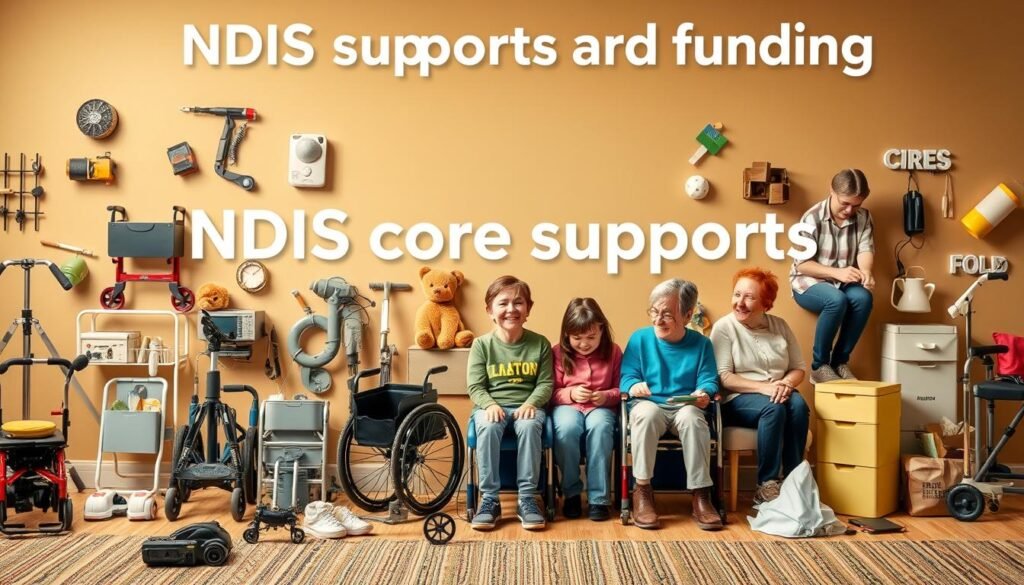
Core supports are crucial for daily tasks. They include help with personal care, household tasks, and joining in community activities. Metro Healthcare provides services funded by core supports. This ensures participants can live on their own.
Capacity Building Supports
Capacity building supports help participants grow their skills and independence. They include therapy, training, and help with social activities. Investing in these supports boosts participants’ ability to handle daily tasks and connect with their communities. Our guide on the role of NDIS support coordinators covers one of the main capacity building supports.
Capital Supports for Equipment and Modifications
Capital supports fund equipment, home changes, and other big investments. This helps participants live safely and independently. It can cover things like wheelchair-accessible vehicles, home renovations, and special equipment. Our guide on creating a safe and accessible home covers some of these modifications.
The NDIS Planning Process
The NDIS planning process is vital for figuring out what supports and funding a participant will get. It involves working with an NDIS planner or Local Area Coordinator (LAC). Together, they create a plan that outlines the participant’s goals, needs, and required supports. Good planning ensures participants get the right funding and support to enhance their lives.
For more details on NDIS supports, call 1300 755 052. Experts are ready to help in Brisbane, Melbourne, and Perth.
Conclusion: Accessing Your NDIS Supports
It’s important to understand the NDIS planning process and support coordination. This helps you get the support you need. The NDIS planning process looks at your needs and goals. It finds the supports you need to reach them.
Good NDIS support coordination is key. It helps you move through the NDIS system smoothly. With a local NDIS expert, you get the right support for a happy life.
Looking for help with your NDIS plan? Our experts are in Brisbane, Melbourne, and Perth. Call 1300 755 052 to talk to a local NDIS expert. Start getting the NDIS supports you deserve.
FAQ
What are reasonable and necessary supports under the NDIS?
What are the five key criteria for NDIS support approval?
What categories of NDIS supports are available?
Can I appeal a decision about my NDIS funding?